02 · Robotics
J-bot
A floor-balancing development prototype designed and built from the ground up, combining printed mechanics, high-rate embedded control and careful fault investigation.
Next iteration · Concept
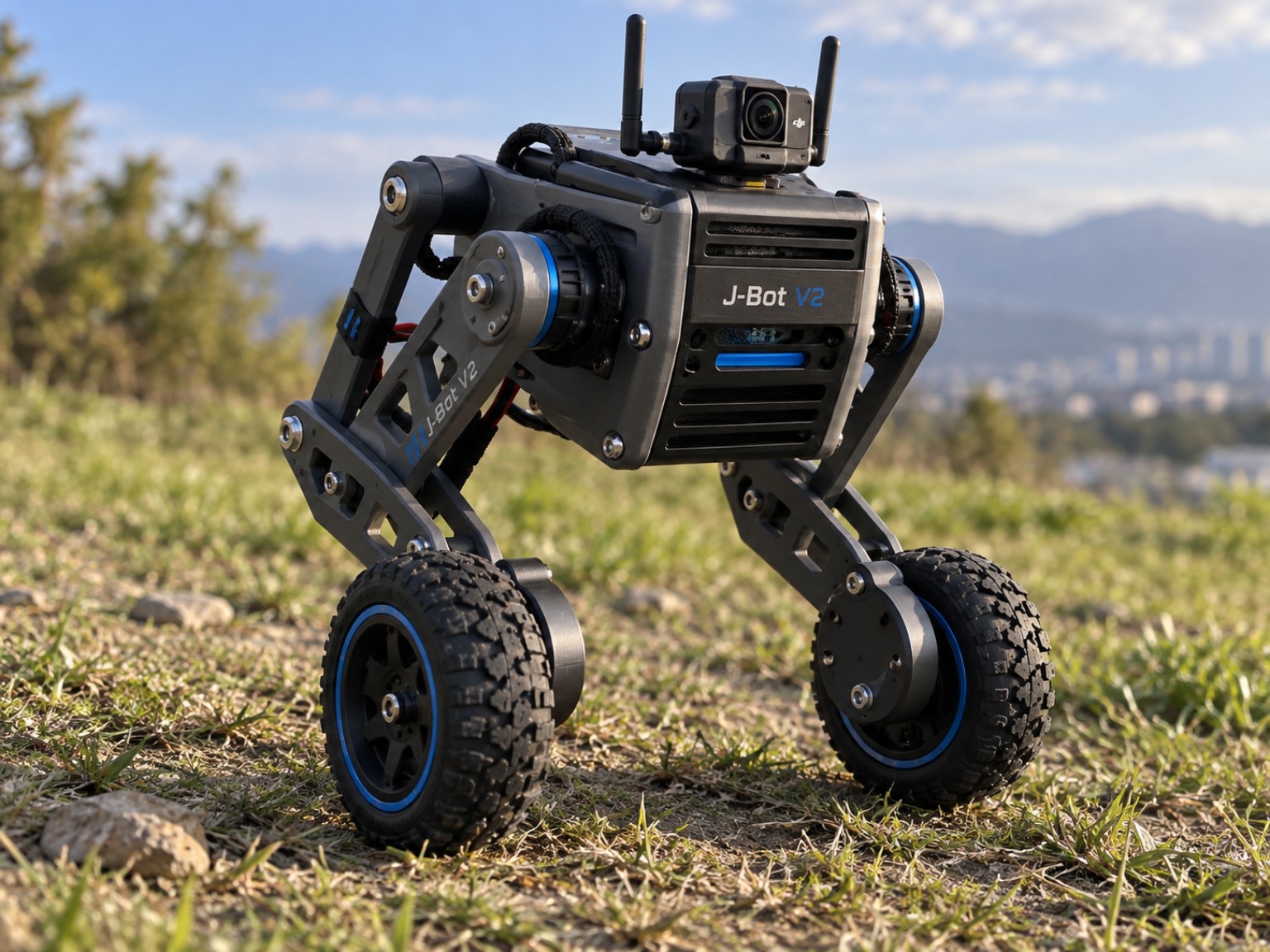
J-bot V2
My next design direction takes the proven balancing platform outdoors with much larger wheels, a compact protected body and two articulated leg mechanisms.
Build
Mechanical, electrical and control work in one machine.
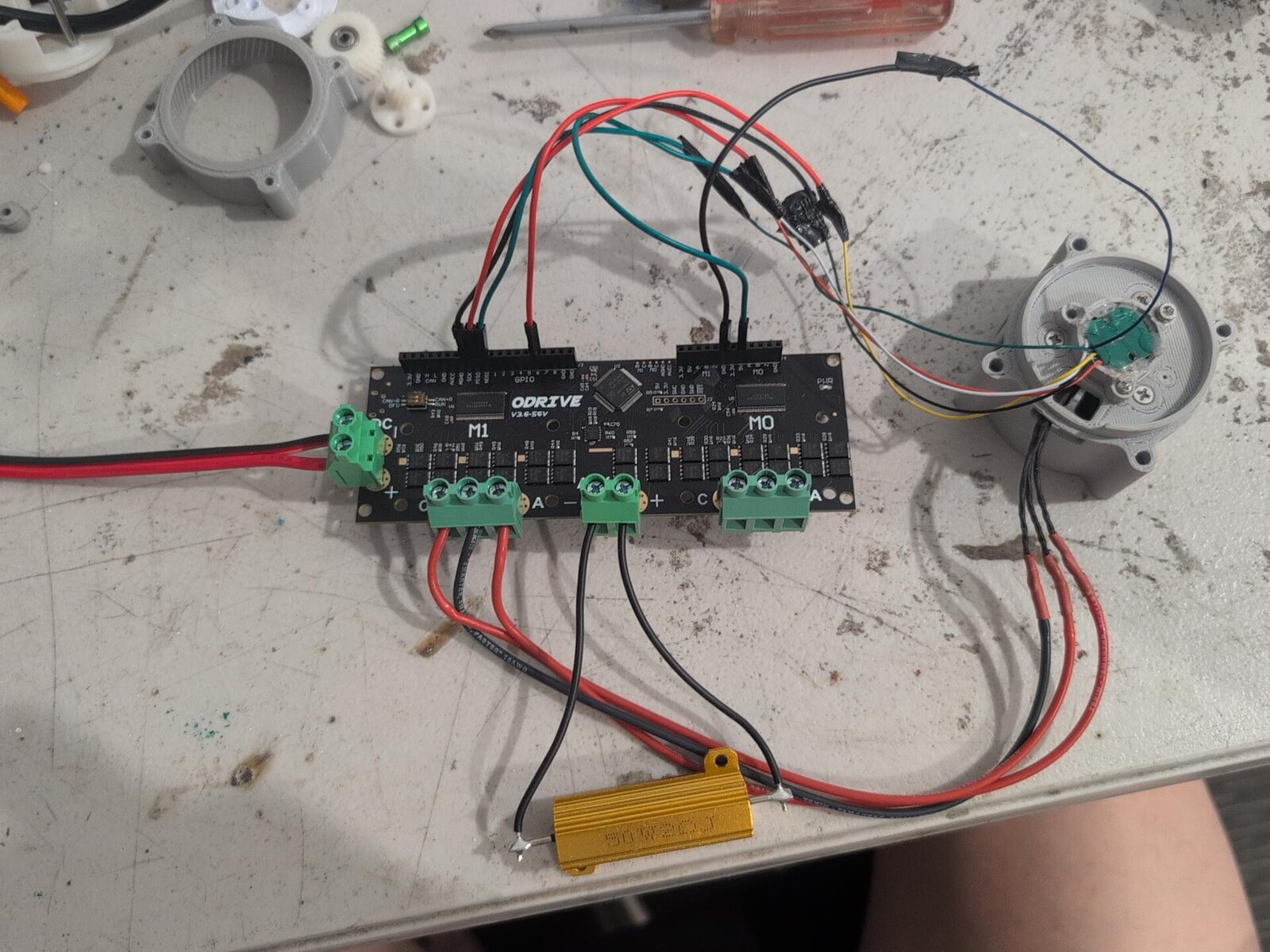
I designed printed body and leg assemblies around two Tarot 4008 motors and 90 mm tyres, then integrated a Teensy 4.0, ICM-42688-P IMU, dual-axis MKS XDRIVE/ODrive controller, absolute magnetic encoders and CAN communications.
The control baseline runs IMU and sensor fusion at 1 kHz with the balance controller at 500 Hz. Startup guards, watchdogs, freshness checks and fall cutoffs are built into the firmware because a powerful balancing robot needs failure handling as much as it needs a good controller.
Investigation
The faults became part of the engineering story.
Motor switching exposed corruption on the absolute encoder SPI paths. Instead of treating one clean run as proof, I compared power, wiring, grounding and switching conditions, instrumented raw SPI behaviour and preserved failed and aborted tests alongside the successful ones.
Replacing weak encoder regulation and recommissioning the mounted sensors produced clean idle and armed tests, followed by endurance runs that made the remaining rare error rate measurable. The point was not to hide uncertainty. It was to reduce it with evidence.
Honest boundary
A credible prototype, not a finished autonomous robot.
J-bot has balanced on the floor and has a robust embedded control foundation. It is still a development platform. Cold-start reliability, permanent sensor power, outer-loop tuning, physical stops and the later articulated biped architecture remain ongoing work.
That boundary is important. Engineering is not declaring victory at the first promising result. It is knowing what the evidence establishes and what still needs to be proven.